Igor Mitoraj i inni artyści
Wystawa w Brukseli
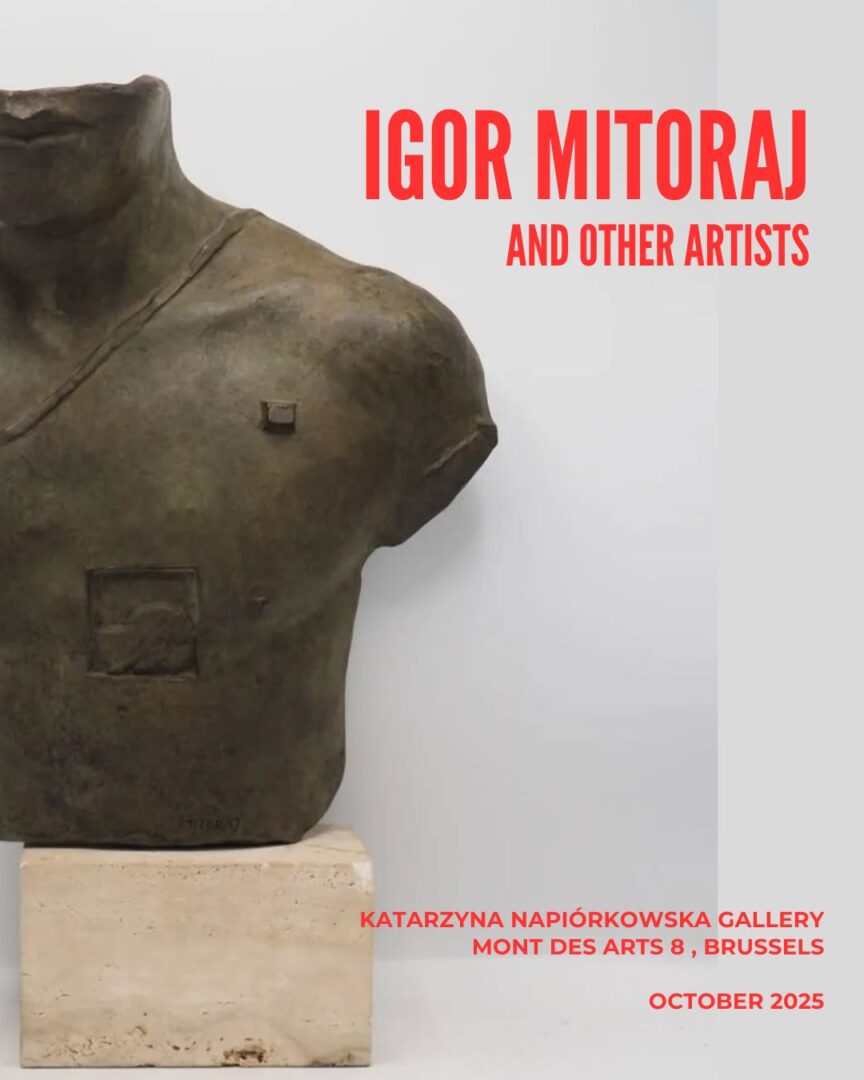
IGOR MIORAJ I INNI
październik 2025
Galeria Sztuki Katarzyna Napiórkowska
Mont des Arts 8, Bruksela
PL
Zapraszamy na otwarte dni w Galerii Katarzyny Napiórkowskiej w Brukseli. Możecie zobaczyć tu prace wybranych polskich artystów – m.in. cenionego rzeźbiarza Igora Mitoraja, grafika Rafała Olbińskiego oraz młodych malarzy i rzeźbiarzy, na przykład Kingi Wojciechowskiej.
16 października 2025 w godzinach 13:00–18:00
17 października 2025 w godzinach 13:00–18:00
18 października 2025 w godzinach 12:00–17:00.
FR
Nous vous invitons aux journées portes ouvertes à la Galerie Katarzyna Napiórkowska à Bruxelles. Vous pourrez y découvrir les œuvres de plusieurs artistes polonais, parmi lesquels le sculpteur renommé Igor Mitoraj, le graphiste Rafał Olbiński, ainsi que de jeunes peintres et sculpteurs, tels que Kinga Wojciechowska.
Journées portes ouvertes : les 16 et 17 octobre 2025 de 13h à 18h, et le 18 octobre de 12h à 17h.
16 octobre 2025: 13:00 – 18:00
17 octobre 2025: 13:00– 18:00
18 octobre 2025: 12:00– 17:00
ENG
We invite you to the Open Days at the Katarzyna Napiórkowska Gallery in Brussels. You’ll have the chance to see works by selected Polish artists, including the renowned sculptor Igor Mitoraj, graphic artist Rafał Olbiński, and young painters and sculptors such as Kinga Wojciechowska.
16 October 2025: 1:00 – 6:00 pm
17 October 2025: 1:00 – 6:00 pm
18 October 2025: 1:00 – 6:00 pm
Galeria Katarzyna Napiórkowska
Warszawa & Bruksela
IGOR MIORAJ I INNI
październik 2025
Galeria Sztuki Katarzyna Napiórkowska
Mont des Arts 8, Bruksela
PL
Zapraszamy na otwarte dni w Galerii Katarzyny Napiórkowskiej w Brukseli. Możecie zobaczyć tu prace wybranych polskich artystów – m.in. cenionego rzeźbiarza Igora Mitoraja, grafika Rafała Olbińskiego oraz młodych malarzy i rzeźbiarzy, na przykład Kingi Wojciechowskiej.
16 października 2025 w godzinach 13:00–18:00
17 października 2025 w godzinach 13:00–18:00
18 października 2025 w godzinach 12:00–17:00.
FR
Nous vous invitons aux journées portes ouvertes à la Galerie Katarzyna Napiórkowska à Bruxelles. Vous pourrez y découvrir les œuvres de plusieurs artistes polonais, parmi lesquels le sculpteur renommé Igor Mitoraj, le graphiste Rafał Olbiński, ainsi que de jeunes peintres et sculpteurs, tels que Kinga Wojciechowska.
Journées portes ouvertes : les 16 et 17 octobre 2025 de 13h à 18h, et le 18 octobre de 12h à 17h.
16 octobre 2025: 13:00 – 18:00
17 octobre 2025: 13:00– 18:00
18 octobre 2025: 12:00– 17:00
ENG
We invite you to the Open Days at the Katarzyna Napiórkowska Gallery in Brussels. You’ll have the chance to see works by selected Polish artists, including the renowned sculptor Igor Mitoraj, graphic artist Rafał Olbiński, and young painters and sculptors such as Kinga Wojciechowska.
16 October 2025: 1:00 – 6:00 pm
17 October 2025: 1:00 – 6:00 pm
18 October 2025: 1:00 – 6:00 pm
Galeria Katarzyna Napiórkowska
Warszawa & Bruksela
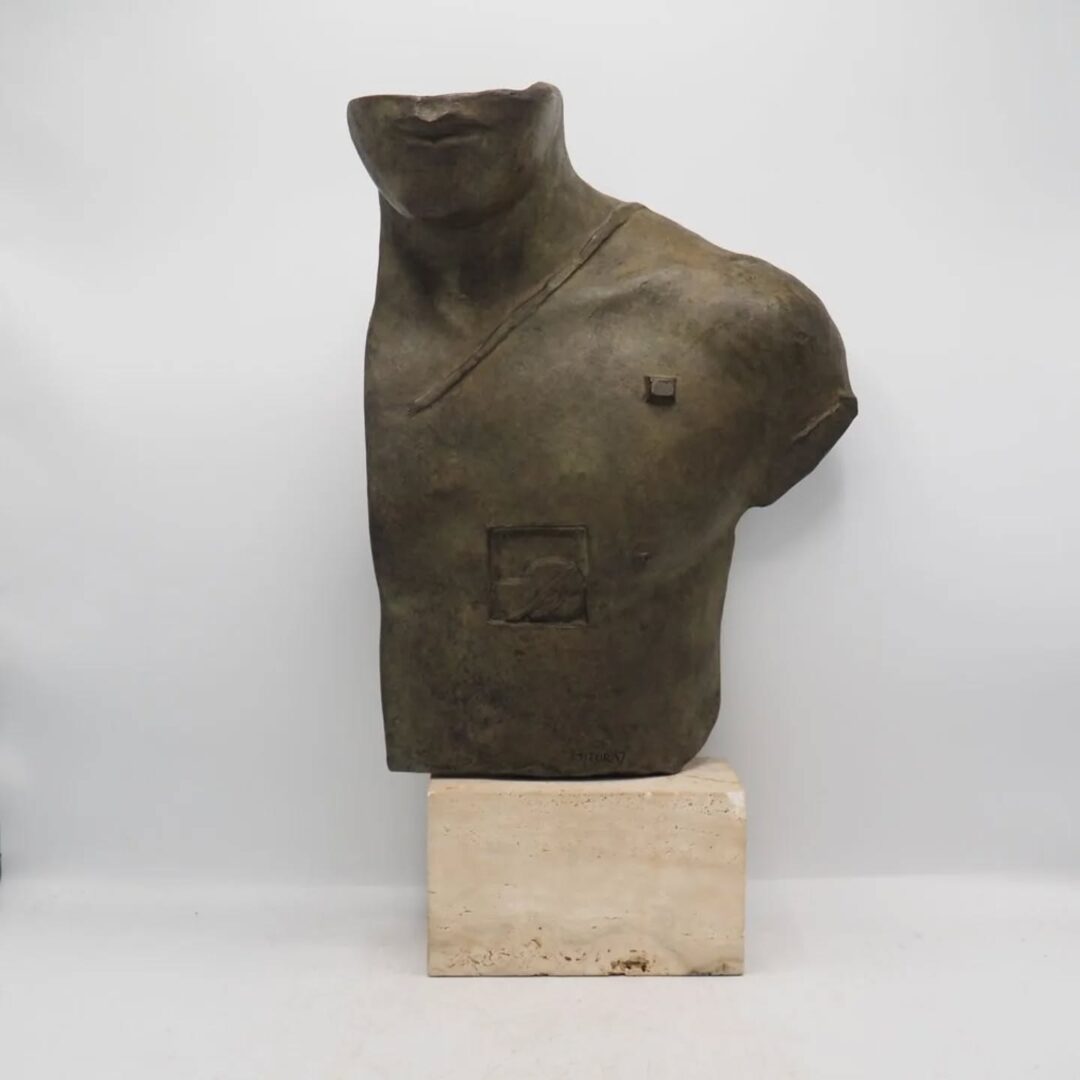
PL W październiku 2025 roku Galeria Katarzyny Napiórkowskiej w Brukseli zaprezentuje wybór dzieł, w tym rzeźbę Asklepios autorstwa Igora Mitoraja. Asklepios, bóg uzdrawiania i syn Apolla, przedstawiany jest z wężem owiniętym wokół laski. W rzeźbie Mitoraja Asklepios jawi się jednak bardziej jako istota ludzka niż boska, uwikłana w dramat kondycji ludzkiej, zmagająca się z cierpieniem, przemijalnością i niedoskonałością.
Igor Mitoraj powiedział: „Patrząc teraz na swoją twórczość, jestem przekonany, że sztuka antyczna jest moim ideałem i budzi tęsknotę za utraconym rajem.” W ten sposób rzeźba staje się traktatem o kondycji ludzkiej, charakteryzującym się dążeniem do nieosiągalnego ideału.
Mitoraj był jednym z najwyżej cenionych rzeźbiarzy XX wieku. Urodził się 26 marca 1944 roku w Oederan w Niemczech, jako syn polskiego robotnika przymusowego i oficera francuskiego Legionu Cudzoziemskiego. Jego matka była zmuszona do pracy w Oederan podczas II wojny światowej. Po wojnie dorastał niedaleko Oświęcimia w Polsce — w pobliżu obozu koncentracyjnego Auschwitz — co niewątpliwie wpłynęło na jego wrażliwość artystyczną.
Ukończył w 1963 roku Liceum Plastyczne w Bielsku-Białej, a następnie studiował malarstwo u Tadeusza Kantora na Akademii Sztuk Pięknych w Krakowie, choć nie ukończył tej uczelni. Później otrzymał tytuł honorowego doktora tej samej akademii. W 1968 roku, na sugestię Kantora, wyjechał do Francji, by studiować w École des Beaux-Arts. Po pobycie w Paryżu osiedlił się w Pietrasancie w Toskanii. Zmarł w Paryżu 6 października 2014 roku.
FR En octobre 2025, la Galerie Katarzyna Napiórkowska à Bruxelles présentera une sélection d’œuvres, parmi lesquelles la sculpture Asclépios d’Igor Mitoraj. Asclépios, dieu de la guérison et fils d’Apollon, est représenté avec un serpent enroulé autour d’un bâton. Dans la sculpture de Mitoraj, toutefois, Asclépios apparaît plus humain que divin, pris dans le drame de la condition humaine et luttant contre la souffrance, l’impermanence et l’imperfection.
Igor Mitoraj a dit : « En regardant mon travail maintenant, je suis convaincu que l’art antique est mon idéal et évoque la nostalgie d’un paradis perdu. » Ainsi, la sculpture devient un traité sur la condition humaine, caractérisé par la poursuite d’un idéal inaccessible.
Mitoraj fut l’un des sculpteurs les plus renommés du XXe siècle. Il est né le 26 mars 1944 à Oederan, en Allemagne, fils d’un travailleur forcé polonais et d’un officier de la Légion étrangère française. Sa mère fut contrainte de travailler à Oederan pendant la Seconde Guerre mondiale. Après la guerre, il grandit près d’Oświęcim, en Pologne, une région proche du camp de concentration d’Auschwitz, expérience qui influença profondément sa sensibilité artistique.
Il a obtenu son diplôme à l’École d’Art de Bielsko-Biała en 1963, puis a étudié la peinture sous la direction de Tadeusz Kantor à l’Académie des Beaux-Arts de Cracovie, qu’il n’a pas terminée. Plus tard, il a reçu un diplôme honorifique de cette même académie. En 1968, sur la recommandation de Kantor, il a déménagé en France pour étudier à l’École des Beaux-Arts. Après avoir vécu à Paris, il s’installa à Pietrasanta, en Toscane, en Italie. Il est décédé à Paris le 6 octobre 2014.
ENG In October 2025, the Katarzyna Napiórkowska Gallery in Brussels will present a selection of works, including the sculpture Asklepios by Igor Mitoraj. Asklepios, the god of healing and son of Apollo, is depicted with a snake wrapped around a staff. In Mitoraj’s sculpture, however, Asklepios appears more human than divine, caught up in the drama of the human condition and struggling with suffering, impermanence, and imperfection.
Igor Mitoraj said: „Looking at my work now, I am convinced that ancient art is my ideal and evokes nostalgia for a lost paradise.” Thus, the sculpture becomes a meditation on the human condition, characterized by the pursuit of an unattainable ideal.
Mitoraj was one of the most highly regarded sculptors of the 20th century. He was born on 26 March 1944 in Oederan, Germany, the son of a Polish forced labourer and a French Foreign Legion officer. His mother was compelled to work in Oederan during World War II. After the war, Mitoraj grew up near Oświęcim, Poland—a region close to the Auschwitz concentration camp—experiences that deeply influenced his artistic sensitivity.
He graduated from Bielsko-Biała Art School in 1963 and studied painting under Tadeusz Kantor at the Academy of Fine Arts in Krakow, though he did not complete the course. Later, he earned an honorary degree from the same academy. In 1968, at Kantor’s recommendation, he moved to France to study at the École des Beaux-Arts. After living in Paris, he settled in Pietrasanta, Tuscany, Italy. He passed away in Paris on 6 October 2014.
Galeria Katarzyna Napiórkowska
Warszawa & Bruksela
PL W październiku 2025 roku Galeria Katarzyny Napiórkowskiej w Brukseli zaprezentuje wybór dzieł, w tym rzeźbę Asklepios autorstwa Igora Mitoraja. Asklepios, bóg uzdrawiania i syn Apolla, przedstawiany jest z wężem owiniętym wokół laski. W rzeźbie Mitoraja Asklepios jawi się jednak bardziej jako istota ludzka niż boska, uwikłana w dramat kondycji ludzkiej, zmagająca się z cierpieniem, przemijalnością i niedoskonałością.
Igor Mitoraj powiedział: „Patrząc teraz na swoją twórczość, jestem przekonany, że sztuka antyczna jest moim ideałem i budzi tęsknotę za utraconym rajem.” W ten sposób rzeźba staje się traktatem o kondycji ludzkiej, charakteryzującym się dążeniem do nieosiągalnego ideału.
Mitoraj był jednym z najwyżej cenionych rzeźbiarzy XX wieku. Urodził się 26 marca 1944 roku w Oederan w Niemczech, jako syn polskiego robotnika przymusowego i oficera francuskiego Legionu Cudzoziemskiego. Jego matka była zmuszona do pracy w Oederan podczas II wojny światowej. Po wojnie dorastał niedaleko Oświęcimia w Polsce — w pobliżu obozu koncentracyjnego Auschwitz — co niewątpliwie wpłynęło na jego wrażliwość artystyczną.
Ukończył w 1963 roku Liceum Plastyczne w Bielsku-Białej, a następnie studiował malarstwo u Tadeusza Kantora na Akademii Sztuk Pięknych w Krakowie, choć nie ukończył tej uczelni. Później otrzymał tytuł honorowego doktora tej samej akademii. W 1968 roku, na sugestię Kantora, wyjechał do Francji, by studiować w École des Beaux-Arts. Po pobycie w Paryżu osiedlił się w Pietrasancie w Toskanii. Zmarł w Paryżu 6 października 2014 roku.
FR En octobre 2025, la Galerie Katarzyna Napiórkowska à Bruxelles présentera une sélection d’œuvres, parmi lesquelles la sculpture Asclépios d’Igor Mitoraj. Asclépios, dieu de la guérison et fils d’Apollon, est représenté avec un serpent enroulé autour d’un bâton. Dans la sculpture de Mitoraj, toutefois, Asclépios apparaît plus humain que divin, pris dans le drame de la condition humaine et luttant contre la souffrance, l’impermanence et l’imperfection.
Igor Mitoraj a dit : « En regardant mon travail maintenant, je suis convaincu que l’art antique est mon idéal et évoque la nostalgie d’un paradis perdu. » Ainsi, la sculpture devient un traité sur la condition humaine, caractérisé par la poursuite d’un idéal inaccessible.
Mitoraj fut l’un des sculpteurs les plus renommés du XXe siècle. Il est né le 26 mars 1944 à Oederan, en Allemagne, fils d’un travailleur forcé polonais et d’un officier de la Légion étrangère française. Sa mère fut contrainte de travailler à Oederan pendant la Seconde Guerre mondiale. Après la guerre, il grandit près d’Oświęcim, en Pologne, une région proche du camp de concentration d’Auschwitz, expérience qui influença profondément sa sensibilité artistique.
Il a obtenu son diplôme à l’École d’Art de Bielsko-Biała en 1963, puis a étudié la peinture sous la direction de Tadeusz Kantor à l’Académie des Beaux-Arts de Cracovie, qu’il n’a pas terminée. Plus tard, il a reçu un diplôme honorifique de cette même académie. En 1968, sur la recommandation de Kantor, il a déménagé en France pour étudier à l’École des Beaux-Arts. Après avoir vécu à Paris, il s’installa à Pietrasanta, en Toscane, en Italie. Il est décédé à Paris le 6 octobre 2014.
ENG In October 2025, the Katarzyna Napiórkowska Gallery in Brussels will present a selection of works, including the sculpture Asklepios by Igor Mitoraj. Asklepios, the god of healing and son of Apollo, is depicted with a snake wrapped around a staff. In Mitoraj’s sculpture, however, Asklepios appears more human than divine, caught up in the drama of the human condition and struggling with suffering, impermanence, and imperfection.
Igor Mitoraj said: „Looking at my work now, I am convinced that ancient art is my ideal and evokes nostalgia for a lost paradise.” Thus, the sculpture becomes a meditation on the human condition, characterized by the pursuit of an unattainable ideal.
Mitoraj was one of the most highly regarded sculptors of the 20th century. He was born on 26 March 1944 in Oederan, Germany, the son of a Polish forced labourer and a French Foreign Legion officer. His mother was compelled to work in Oederan during World War II. After the war, Mitoraj grew up near Oświęcim, Poland—a region close to the Auschwitz concentration camp—experiences that deeply influenced his artistic sensitivity.
He graduated from Bielsko-Biała Art School in 1963 and studied painting under Tadeusz Kantor at the Academy of Fine Arts in Krakow, though he did not complete the course. Later, he earned an honorary degree from the same academy. In 1968, at Kantor’s recommendation, he moved to France to study at the École des Beaux-Arts. After living in Paris, he settled in Pietrasanta, Tuscany, Italy. He passed away in Paris on 6 October 2014.
Galeria Katarzyna Napiórkowska
Warszawa & Bruksela